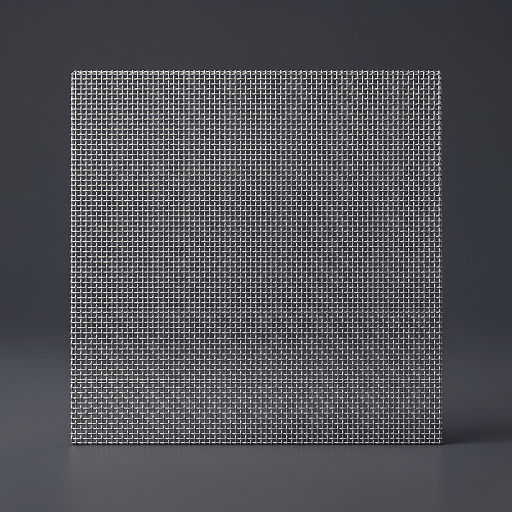
Paper mill wire mesh is a mesh-based material used in paper manufacturing, particularly in the forming section where the wet paper sheet is initially formed.
Understanding Paper Machine Mesh
What Is Paper Mill Wire Mesh?
Paper mill wire mesh is a mesh-based material used in the paper manufacturing process, particularly during the formation of the paper sheet. It is commonly referred to as paper machine wire or forming fabric when used on the forming section of a paper machine.
During paper production, a mixture of water and fibres, known as pulp or stock, is delivered onto a moving mesh surface. The mesh supports the fibres as water passes through its openings. As the water drains away, the fibres collect and form a continuous wet paper sheet.
The forming surface therefore performs two important functions: it provides support for the developing sheet and allows controlled water removal. Its construction influences fibre retention, drainage behaviour, sheet formation and the quality of the paper surface.
Traditional paper machine wires were made using metal wire constructions. However, many modern forming fabrics use engineered synthetic monofilaments, commonly polyester, woven into a continuous fabric. The actual material and construction depend on the machine design and the intended paper-making application.
Paper mill wire mesh should not be confused with ordinary square wire mesh or general-purpose filter mesh. A paper machine forming fabric is an engineered machine component designed to operate under continuous movement, tension, drainage, cleaning and wear conditions.
The term paper machine clothing is also broader than forming wire. It can include forming fabrics, press felts and dryer fabrics, which perform different functions in separate sections of the paper machine. This page focuses primarily on the forming wire or forming fabric used during sheet formation.
Fabric Construction and Technical Parameters
Paper Mill Wire Mesh Specifications
| Product Type | Paper machine forming mesh |
|---|---|
| Material | Confirm whether metal wire or synthetic fabric is required |
| Synthetic Material | Confirm available polymer and material options, if applicable |
| Metal Material | Confirm metal type and grade, if applicable |
| Fabric Construction | Confirm available single, double, 2.5-layer or triple-layer constructions |
| Fabric Width | Confirm machine-specific width |
| Fabric Length / Loop Length | Confirm required machine dimensions |
| Paper Grade | Confirm intended paper or board grade |
| Application | Paper and board sheet formation |
| Customisation | Subject to product range and manufacturing capability |
Sheet Formation and Water Drainage
How Does Paper Machine Wire Mesh Work?
Paper machine wire mesh operates in the forming section of a paper machine. It receives the diluted fibre suspension from the headbox and provides the surface on which the initial paper sheet develops.
The forming process combines fibre distribution, water drainage and sheet formation. The mesh must allow water to pass through while supporting the developing fibre mat.
1. Pulp Is Delivered onto the Mesh
A diluted mixture of water and paper fibres is delivered from the machine’s headbox onto the moving forming fabric. The fibres are distributed across the width of the machine.
2. Water Drains Through the Fabric
As the forming fabric moves, water passes through its openings. Gravity and drainage elements such as foils, vacuum boxes and other dewatering equipment assist the water-removal process.
3. Fibres Form a Wet Paper Sheet
The fibres are retained on the forming surface and begin to collect into a continuous wet sheet. The distribution of fibres and the drainage behaviour influence the formation and uniformity of the paper.
4. The Sheet Moves Towards the Press Section
After initial formation and drainage, the wet paper web is transferred from the forming section towards the press section. Further water removal takes place during pressing.
Why Mesh Construction Matters
The fabric’s weave, drainage characteristics, dimensional stability and surface structure affect how it performs on the machine. A suitable forming fabric must balance water removal with fibre support and retention.
A fabric that drains too aggressively or provides insufficient fibre support may affect sheet formation. A construction that does not provide the required drainage can also influence machine performance.
The correct design must therefore be matched to the paper grade, furnish, machine configuration and operating conditions.
Paper Formation and Production
Where Is Paper Mill Wire Mesh Used?
| Writing & Printing Paper | Supporting fibre formation and controlled drainage. |
|---|---|
| Kraft Paper Manufacturing | Supporting sheet formation and water removal. |
| Packaging Paper & Board | Ensuring consistent sheet formation and drainage. |
| Tissue Paper Production | Supporting fibre retention and sheet formation. |
| Newsprint Production | Maintaining uniform sheet formation and drainage. |
| Specialty Paper Production | Meeting specific paper grade and fibre requirements. |
| Recycled Paper Production | Supporting drainage and formation of recycled pulp. |
| Paperboard & Multi-Ply Formation | Supporting multi-layer sheet formation in paper machines. |
Paper Mill Wire Mesh FAQs
Common Questions About Paper Mill Wire Mesh
It supports the developing paper sheet while allowing water to drain from the pulp suspension. It also contributes to fibre retention and sheet formation.
Traditional paper machine wires used metal constructions. Many modern forming fabrics use synthetic monofilaments, commonly polyester. The required material depends on the machine and product specification.
Both terms commonly refer to the mesh or fabric used in the forming section of a paper machine. Forming fabric is widely used for modern synthetic constructions.
Common constructions include single-layer, double-layer, 2.5-layer and triple-layer forming fabrics. The suitable construction depends on machine requirements and paper grade.
Forming fabrics are used in the production of different paper grades, including writing and printing paper, kraft paper, tissue, newsprint, packaging paper and board.
Important factors include fabric construction, material, drainage, fibre retention, dimensional stability, wear resistance, machine speed and operating conditions.
Confirm the machine type, paper grade, fabric width, loop length, material, construction and operating conditions. An existing fabric specification or machine drawing can help establish the requirement.
Paper Manufacturing Mesh Requirements
Discuss Your Paper Mill Wire Mesh Requirements
Looking for paper mill wire mesh or a forming fabric for paper manufacturing? The correct product depends on the paper machine, forming position, paper grade, material and required fabric dimensions.
Share your machine details and existing fabric specifications with Accurate Wire Mesh so the required product type and available supply options can be confirmed.