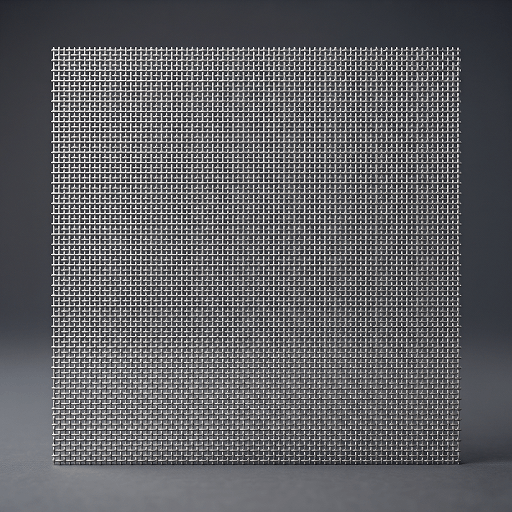
Pharma wire mesh is a woven metal mesh used in pharmaceutical processing equipment for screening, sieving and separating powders or granules.
Understanding Pharmaceutical Mesh
What Is Pharma Wire Mesh?
Pharma wire mesh is a woven metal screening material used in pharmaceutical manufacturing and processing equipment. It is designed to separate, classify or screen powders and granules through controlled mesh openings.
The mesh is commonly incorporated into pharmaceutical sieves, vibrating screening machines, powder-processing equipment and other applications where particle-size separation is required.
In pharmaceutical powder processing, screening can serve different purposes. It may remove oversized foreign particles, separate material into different particle-size ranges or help achieve a more consistent powder or granule distribution before the next manufacturing stage.
The mesh is an important part of this process because its opening dimensions influence which particles can pass through and which remain on the screening surface.
Stainless steel woven wire mesh is commonly used for pharmaceutical sieving applications. However, the correct material grade must be selected according to the product being processed, cleaning requirements and operating environment.
Pharma wire mesh should not be selected by mesh count alone. Aperture size, wire diameter, weave construction and dimensional accuracy must also be considered. Where a particular pharmaceutical process requires documented specifications, the mesh supplier should be able to confirm the relevant material and inspection information.
It is also important to understand that the mesh itself does not make an entire machine or manufacturing process compliant with pharmaceutical regulations. The complete equipment design, material selection, installation, cleaning and validation procedures must meet the requirements of the intended process.
Screening and Particle-Size Control
How Is Pharma Wire Mesh Used in Pharmaceutical Processing?
Pharma wire mesh functions as a screening surface within pharmaceutical processing equipment. Powder or granules are introduced onto the mesh, and movement or vibration helps particles interact with the openings.
Particles that are small enough to pass through the apertures move to the next stage, while larger particles or unwanted material remain on the screening surface.
1. Powder Screening
Pharmaceutical powders may contain particles of different sizes. A selected mesh opening allows the process to separate material according to the required screening specification.
2. Oversized Particle Removal
Check screening or safety screening can help remove oversized material or unwanted foreign particles before the powder moves further through the production process.
3. Particle-Size Classification
Different mesh openings can be used to separate powder or granules into size fractions. This can support processes where particle-size distribution needs to be controlled.
4. Granule Screening
After granulation, screening may be used to separate granules into suitable size ranges and remove oversized or undersized material, depending on the process specification.
5. Equipment-Based Sieving
Pharmaceutical mesh may be installed in equipment such as vibro sifters, vibrating screens and other powder screening systems. The mesh dimensions and tension must suit the equipment design.
Important Process Note:
The final particle-size distribution depends on more than the mesh aperture. Particle shape, moisture, powder behaviour, vibration, screen loading and operating time can also influence screening results.
Material and Precision Parameters
Pharma Wire Mesh Specifications
| Product type | |
|---|---|
| Material grades | |
| Roll Length | |
| Available Roll widths | |
| Mesh Style | |
| Wire diameter | |
| Opening dimensions in mm | |
| Weight per roll | |
| Surface finish | |
| Supply Format | Roll, sheet or finished sieve mesh; subject to availability |
Mesh Inspection and Process Suitability
What Should Be Checked Before Using Pharma Wire Mesh?
In pharmaceutical processing, mesh selection is not only about choosing an opening size. The mesh must also be appropriate for the material, equipment, cleaning process and quality requirements of the manufacturing operation.
1. Material Compatibility
The selected metal should be compatible with the pharmaceutical material and cleaning agents it may contact. The suitability of the grade should be reviewed against the actual process conditions.
2. Aperture Consistency
The openings should meet the required dimensional specification. Inconsistent apertures can affect particle separation and the repeatability of screening.
3. Wire Condition
The mesh should be inspected for broken wires, deformation, damaged intersections and other physical defects that may affect screening or create contamination risks.
4. Cleanability
The mesh construction and its mounting arrangement should allow the cleaning method required by the equipment and manufacturing process. Cleaning effectiveness must be assessed as part of the complete assembly.
5. Secure Installation
The mesh should be mounted securely in its frame or equipment. Incorrect tension, loose edges or unsuitable attachment methods may affect operation and inspection.
6. Traceability and Records
Where required, material identification and inspection records should be available to support the buyer’s quality and documentation procedures. Confirm the actual documents available from the supplier before making a purchasing decision.
7. Periodic Inspection
Mesh can stretch, deform, become blocked or suffer damage during repeated use and cleaning. Inspection and replacement should follow the equipment manufacturer’s instructions and the user’s quality procedures.
Important Compliance Note:
The phrase “pharma grade” should not be used as a substitute for a defined material specification or documented quality requirement. Similarly, supplying pharmaceutical mesh does not by itself establish GMP compliance, FDA approval or compliance of the complete processing equipment.
Pharmaceutical Manufacturing Uses
Where Is Pharma Wire Mesh Used?
| Pharmaceutical Powder Sieving | Separating powders according to particle size. |
|---|---|
| Raw Material Screening | Removing oversized particles and impurities. |
| Granule Size Separation | Classifying granules into different size fractions. |
| Vibro Sifter Equipment | Screening powders and granules using vibrating screens. |
| Tablet Manufacturing | Preparing powders and granules for tablet production. |
| Capsule Manufacturing | Ensuring suitable powder and granule consistency before filling. |
| Laboratory Sieve Testing | Analysing particle-size distribution using test sieves. |
| Pharmaceutical Process Filtration | Separating unwanted particles from process fluids. |
Pharma Wire Mesh FAQs
Common Questions About Pharma Wire Mesh
It is used in powder screening, raw material check screening, granule sizing, vibro sifters and selected pharmaceutical processing equipment.
Stainless steel woven mesh is commonly used for pharmaceutical screening. The appropriate grade must be selected according to the material being processed and cleaning conditions.
Pharma sieve mesh is commonly used to screen powders and granules, while filter mesh is specified for separating particles from liquids, gases or other process streams.
Aperture determines the clear opening through which particles can pass. It directly influences the screening and particle-separation process.
No. Mesh count should be considered with aperture size, wire diameter, weave construction and applicable tolerance requirements.
Suitable woven mesh can be installed in pharmaceutical vibro sifters. The mesh dimensions, aperture, tension and mounting arrangement must match the equipment.
No. The mesh alone does not establish GMP compliance. The material, equipment design, installation, cleaning, documentation and complete manufacturing process must meet the applicable requirements.
Precision Mesh for Pharmaceutical Applications
Find the Right Pharma Wire Mesh for Your Processing Requirements
Looking for pharma wire mesh for powder screening, sieving or granule separation? Accurate Wire Mesh can help you discuss the required material, aperture, mesh count, wire diameter and mesh dimensions.
Share your application details and equipment requirements to confirm the suitable mesh specification and available supply options.