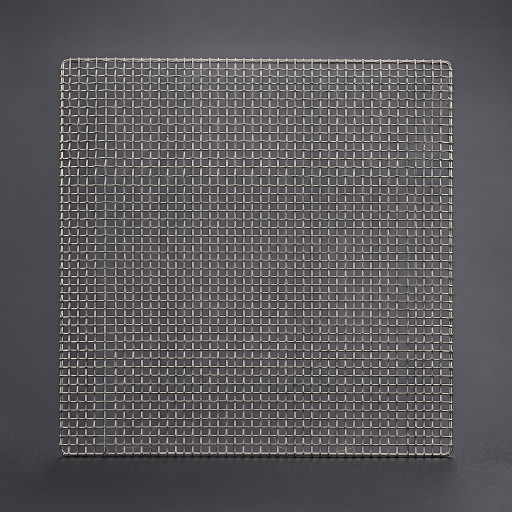
Filter wire mesh is a woven metal material used to separate particles from liquids, gases and other process materials.
Understanding Industrial Filter Mesh
What Is Filter Wire Mesh?
Filter wire mesh is a woven metal filtration material designed to separate particles from a liquid, gas or other flowing material. It consists of metal wires interlaced in a controlled pattern to create openings through which the process fluid can pass while particles of a specified size are retained.
The filtration performance depends on the opening size, wire diameter, mesh count, weave pattern and material. These parameters determine how the mesh interacts with the material being filtered.
Filter wire mesh is commonly manufactured using woven wire cloth. Depending on the required filtration level, it may use a square opening pattern or a more compact weave designed for finer particle retention.
For example, plain woven mesh provides regular openings for general screening and filtration. Twill and Dutch weave constructions can be selected for applications that require different combinations of finer filtration, wire strength and flow characteristics.
Stainless steel is a commonly used material for industrial filter mesh because it offers corrosion resistance in many operating environments. The appropriate grade must still be selected according to the fluid, temperature, cleaning process and chemical exposure.
Filter wire mesh can be supplied as woven cloth or converted into components such as filter discs, screens and other filter elements, depending on manufacturing capability.
It is important to distinguish filter wire mesh from a complete filter assembly. The mesh is the filtration medium; a finished filter may also require a supporting frame, housing, sealing arrangement or multiple filtration layers.
Particle Separation and Filtration
How Does Filter Wire Mesh Work?
Filter wire mesh works by allowing a flowing material to pass through its openings while retaining particles that are too large to pass through the selected filtration structure.
The exact filtration behaviour depends on the mesh construction and the type of material being processed.
1. Flow Enters the Filter Surface
Liquid or gas containing suspended particles reaches the filter mesh. The material approaches the mesh surface through the filtration system.
2. Material Passes Through the Openings
The fluid passes through the available openings in the woven wire structure. The amount of open area affects how easily the material can flow through the mesh.
3. Particles Are Retained
Particles larger than the effective openings may be retained on the surface or within the mesh structure. Smaller particles may pass through, depending on the actual opening geometry and filtration conditions.
4. Filtered Material Continues Through the System
The filtered fluid or gas moves to the next stage of the process. In some systems, retained material is collected, removed or cleaned from the filter surface.
Important Filtration Consideration
Mesh count alone does not define the exact filtration opening. Wire diameter and weave construction also affect the clear aperture. For applications requiring a specific particle-retention level, the required micron rating and filtration performance should be confirmed rather than relying only on the mesh count.
Filtration and Material Parameters
Filter Wire Mesh Specifications
| Product type | Woven Metal Filtration Mesh |
|---|---|
| Manufacturing Method | Wire weaving |
| Mesh configurations | |
| Roll Length | |
| Available Roll widths | |
| Weave Types | Plain, twill, plain Dutch and twill Dutch; availability to be confirmed |
| Wire diameter | |
| Opening dimensions in mm | |
| Weight per roll | |
| Surface finish | |
| Application | Liquid, gas and industrial process filtration, subject to material suitability |
Different Weave Constructions
Common Types of Filter Wire Mesh
Filter wire mesh is available in different weave constructions. Each weave changes the arrangement of the wires and the shape or size of the openings.
The appropriate construction depends on the required filtration level, flow characteristics, wire strength and operating pressure. The following are common industrial woven-wire filtration constructions; actual availability from Accurate Wire Mesh should be confirmed.
1. Plain Weave Filter Mesh
Plain weave is one of the most common woven wire mesh constructions. Each wire passes alternately over and under the wires running in the opposite direction, forming a regular pattern.
It is suitable for general screening, straining and filtration where square openings are required.
Typical applications: General filtration, strainers, screening and separation.
2. Twill Weave Filter Mesh
In twill weave, each wire passes over and under two or more wires in the opposite direction, creating a diagonal pattern. This construction can accommodate heavier wires in finer mesh arrangements compared with some plain-weave configurations.
Typical applications: Fine filtration, industrial filter cloth and applications requiring a stronger woven structure.
3. Plain Dutch Weave
Plain Dutch weave uses wires of different diameters and a closely woven arrangement. The resulting openings are small and typically do not form the same straight-through square pattern found in ordinary square weave.
It is used in selected fine-filtration applications where particle retention is important.
Typical applications: Fine liquid filtration, industrial filter elements and process filtration.
4. Twill Dutch Weave
Twill Dutch weave combines the twill weaving pattern with the closely arranged wires used in Dutch constructions. It is designed for fine filtration applications where a compact structure and suitable mechanical strength are required.
Typical applications: Fine industrial filtration and specialised filter cloth applications.
Filtration Across Different Industries
Where Is Filter Wire Mesh Used?
| Chemical Processing | Separating suspended particles and solids from process liquids. |
|---|---|
| Oil & Petroleum | Removing contaminants from oil and petroleum products. |
| Water Filtration | Filtering unwanted particles from water. |
| Pharmaceutical | Supporting fine filtration and material-handling processes. |
| Food & Beverage | Straining and filtering liquids and food ingredients. |
| Polymer & Plastic | Retaining impurities during polymer processing. |
| Air & Gas Filtration | Separating unwanted particles from air and gas streams. |
| Industrial Machinery | Protecting equipment using strainers, screens and filter assemblies. |
Filter Wire Mesh FAQs
Common Questions About Filter Wire Mesh
It is used in industrial filtration, strainers, water processing, chemical processing, oil filtration and selected food, pharmaceutical and polymer applications.
Stainless steel is widely used for industrial filter mesh. The appropriate grade depends on the fluid, chemicals, temperature and operating environment.
Mesh count describes the mesh density, while micron rating describes a filtration opening or particle-retention specification. They are related but are not interchangeable.
Common woven filtration constructions include plain weave, twill weave, plain Dutch weave and twill Dutch weave.
Aperture is the clear opening between adjacent wires. It affects the size of particles that can pass through the mesh.
Yes. Suitable woven metal mesh can be used in liquid filtration and straining systems. Material, opening size and weave must match the liquid and operating conditions.
Custom dimensions or converted filter components may be possible depending on the manufacturing capability and product construction. Confirm the required mesh, material and dimensions with Accurate Wire Mesh.
Filtration Mesh for Industrial Processes
Find the Right Filter Wire Mesh for Your Requirements
Looking for filter wire mesh for industrial filtration, liquid separation or process equipment? Accurate Wire Mesh can help you discuss the required material, weave construction, mesh count, aperture and wire diameter.
Share your filtration application and technical requirements to confirm the suitable mesh specification and available supply options.